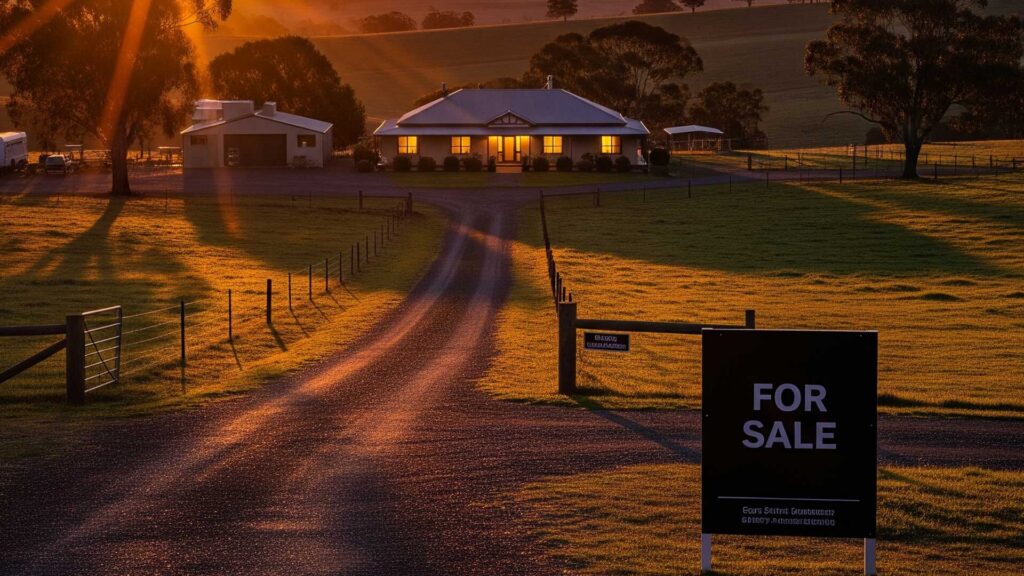
Here in Australia, with our diverse agricultural landscape – from the sprawling sheep stations of Queensland to the lush vineyards of South Australia – sellers often make missteps that can significantly impact their farm’s saleability and final price. Let’s delve into the most common errors and how you can steer clear of them.
Mistake #1: Underestimating the Power of Presentation
You wouldn’t sell a house with peeling paint and an overgrown garden, so why would you list a farm that looks tired? First impressions are everything, and for a farm, that extends beyond the homestead.
Many sellers neglect the overall presentation of their property. This isn’t just about cleaning up the house; it’s about showcasing the farm’s operational efficiency and potential. Are fences in good repair? Are the sheds tidy and organised? Is the land itself presented to its best advantage, even if it’s been a tough season?
The Fix: Invest time and, if necessary, a little capital into tidying up the entire property. This might mean repairing infrastructure, clearing overgrown areas, and ensuring equipment is stored neatly. Professional photography is non-negotiable – bland, poorly lit photos of a sprawling property simply won’t cut it. Consider drone footage to highlight the farm’s scale and layout.
Mistake #2: Ignoring Crucial Due Diligence and Documentation
Farm sales are rife with complex legalities and environmental considerations. Many sellers get caught off guard by not having all their documentation in order. This can lead to delays, price chip-backs, or even the collapse of a sale.
Are your water licenses up to date and clearly documented? What about environmental reports, soil tests, or pest management plans? Have you accurately accounted for all machinery, livestock, and produce included in the sale? Buyers, especially sophisticated agricultural investors, will conduct thorough due diligence, and any missing or inaccurate information will raise red flags.
The Fix: Start compiling all essential documents well in advance of listing. This includes:
- Water entitlements and usage history.
- Pest and weed declarations.
- Environmental impact statements or land management plans.
- Recent financial records (if the business is being sold with the land).
- Detailed inventory of inclusions (machinery, tools, fixtures).
- Boundary surveys and any easement details.
A proactive approach here demonstrates transparency and professionalism, instilling confidence in potential buyers.
Mistake #3: Setting an Unrealistic Price
This is perhaps the most common mistake across all property sales, but it’s particularly damaging in the niche farm market. Emotional attachment to a family farm, coupled with a lack of current market data, often leads to sellers overpricing their property.
An overpriced farm will sit on the market, gathering dust, and eventually, buyers will assume there’s something wrong with it. Australian farm land values fluctuate based on commodity prices, weather patterns, and global economic factors. What your neighbour’s farm sold for five years ago is likely irrelevant today.
The Fix: Engage a specialist rural real estate agent who has a proven track record in your specific agricultural sector and region (e.g., someone who understands broadacre cropping in Western Australia if that’s where your farm is). They will have access to recent comparable sales data and an understanding of current market sentiment. Be open to their valuation, even if it’s not what you hoped for. A realistic price from the outset attracts serious buyers and often leads to a quicker, more favourable sale.
Mistake #4: Skimping on Marketing and Exposure
Selling a farm isn’t like putting a “for sale” sign out the front of a suburban home. Your target audience is specific, often dispersed, and may not be actively searching on general real estate portals. Many sellers rely solely on a single local agent and minimal advertising, severely limiting their reach.
The Fix: A comprehensive marketing strategy is crucial. This should include:
- Specialised rural property websites: These platforms cater directly to agricultural buyers.
- Industry publications: Both print and digital, relevant to your farm’s output (e.g., cattle magazines, wine industry journals).
- Professional networks: A well-connected agent can tap into their database of qualified buyers and investors, both domestic and international.
- High-quality brochures and information memorandums: These provide detailed insights for serious prospects.
Targeted social media campaigns: Increasingly, sophisticated buyers are found online.
Mistake #5: Failing to Communicate the Farm's Story and Potential
Buyers aren’t just purchasing land and buildings; they’re buying a lifestyle, a business opportunity, or a strategic investment. Many sellers focus purely on the tangible assets and neglect to articulate the farm’s unique story, its history, its operational advantages, and its future potential.
What makes your farm special? Is it the fertile soil, the reliable water source, the proximity to markets, the established infrastructure, or perhaps a strong local community? Don’t assume buyers will automatically see these benefits.
The Fix: Work with your agent to craft a compelling narrative. Highlight:
- Productivity and yields: Provide evidence of historical performance.
- Infrastructure advantages: Emphasise the quality of bores, dams, sheds, yards, etc.
- Location benefits: Access to ports, processing plants, and regional towns.
- Lifestyle aspects: If applicable, describe the community, schools, and amenities.
Future opportunities: Could the farm be diversified? Is there scope for expansion or new ventures?
Selling a farm in Australia is a significant undertaking, but by avoiding these common mistakes, you can significantly improve your chances of a successful and profitable outcome. Engage the right professionals, prepare meticulously, present impeccably, price realistically, and tell your farm’s story effectively. Your efforts will undoubtedly bear fruit.